
By Camila Crocker
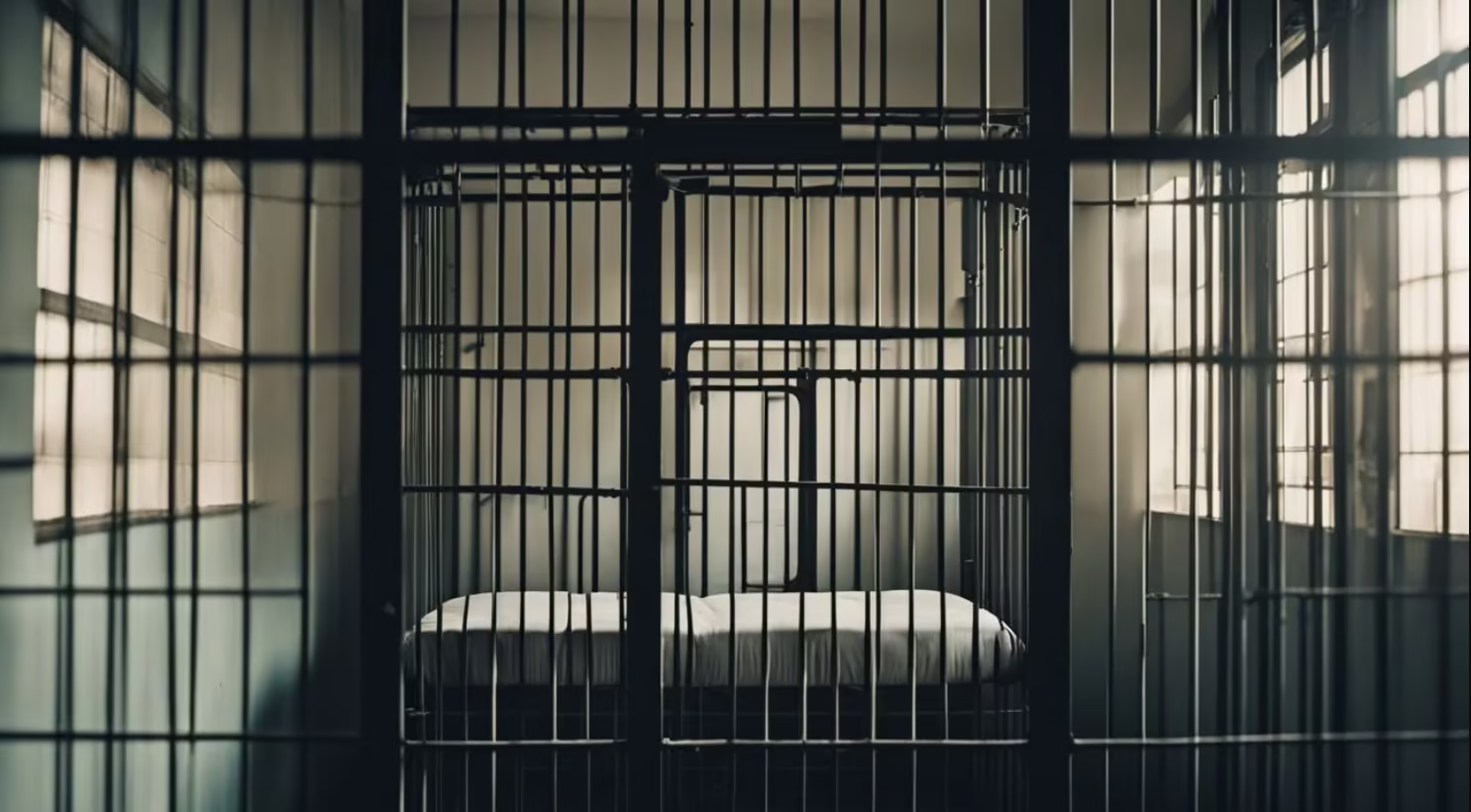
With the rise of global warming, urbanisation and the modern office job, countless articles and research studies have explored the impact of limited fresh air on mental health. Amid this surge of research, one group is often overlooked. Behind bars, with limited outdoor time and poorly designed spaces, what should be a natural resource becomes a luxury. What impact do four grey walls have on the mental health of those navigating the criminal justice system?
Research consistently shows that spending time outdoors has measurable benefits. According to Harvard’s School of Public Health, exposure to green space results in mental restoration, increased positive emotions and decreased anxiety and rumination. The study suggests that even brief periods in nature can reduce stress hormones, lower blood pressure and improve mood. And yet, when someone is declared a criminal, one of the first things lost is their connection to the natural, human side of life. With 56% of men and 74% of women in prisons (reports from 2024/2025) reporting mental health problems, it is increasingly relevant to find ways to improve these statistics. In a world focused on rehabilitation rather than punishment, one of the first things to restore should be access to green space.
The Ministry of Justice Rehabilitation Ethos is focused on the belief that individuals who have committed offences can change and successfully reintegrate into society. This approach emphasises rehabilitation over punishment, aiming to reduce reoffending rates by promoting self-efficacy and utilising various support mechanisms including education, vocational training and mental health services. In order to do this, fresh air and access to nature-based activities are essential elements of this approach.
In 2025, the University of Birmingham published a book on designing landscapes in prisons and the importance of designing prison spaces with this nature-based rehabilitation in mind. Delving into trauma-informed design (TiD), the book suggests spaces be designed with nature and greenery in mind. The book emphasises the importance of supporting local biodiversity by incorporating native species and creative wildlife habitats through gardens, ponds and plantations. Key benefits include fostering a sense of agency and easing feelings of hopelessness among prisoners. Participating in activities such as community gardening, planting and weeding allows individuals to contribute to these spaces and experience the satisfaction of nurturing life
This is not just theoretical work. The Unlocking Project by the Conservation Foundation, which began in 2016, shared positive responses by both prisoners and staff involving the enthusiasm created by greener spaces and the benefits on mental health from such simple activities as planting a bulb, tending to a plant and watching it flourish.
For society in general, and prisoners in particular, reconnecting with nature and focusing on the conservation or creation of green spaces is not only a basic human right but also our duty towards our ecosystems. Nature always gives back in countless ways, whether through fruits and vegetables or, while less economically tangible, more important ways. Nature always calms our nervous systems, fosters a sense of belonging and improves mental health. Ensuring that fresh air and green spaces are accessible to all, including those in the criminal justice system, is an essential step towards healing and rehabilitation.
This is an opinion piece brought to you by The View