The View Magazine Launches Issue 18 Focused on the Female Fight for Justice. London, UK–7th July 2026, The View Magazine, the award-winning independent platform dedicated to amplifying the voices of women impacted by the criminal justice system, announces the release of Issue 18, a 100+ page spring edition filled with stories of resilience, creativity, and…

The View Magazine


By Amelie Baker This Thursday the House of Lords voted to approve the amendment to decriminalise abortions across the UK, re-centring women and their right to bodily autonomy in the eyes of the law. The amendment originally passed through the House of Commons with flying colours last June in a free vote of MPs, with…

Proposals tighten the standard of proof for police misconduct and unlawful killing verdicts, which justice organisations argue, protects perpetrators and entrenches a culture of impunity, “marred by racism and misogyny.” Content Type: News In October 2025, the Home Office responded to recommendations from a government-commissioned review by Timothy Godwin and Sir Adrian Fulford, who…

Content Label: News Politicians in Jersey have recently approved an amendment to the Criminal Justice (Young Offenders) (Jersey) Law 2014, intended to enhance the rights of children and young people on the island. Before this amendment, children (ages 10-14) and young adults (ages 15-17) serving youth detention sentences in the island’s secure accommodation facility,…

by Aarchi Mewara MSc International Criminology and Criminal Justice, Cardiff University Whilst women in prison are a minority of the total population in UK prisons, they have some of the highest rates of mental illness, self-harm and suicide in the country, raising serious questions about whether prisons are used as a means of dealing…
The View Magazine Launches Issue 17 Focused on Abolition. London, UK–31st March 2026, The View Magazine, the award-winning independent platform dedicated to amplifying the voices of women impacted by the criminal justice system, announces the release of Issue 17, a 200+ page spring edition examining systemic failures in medical care for women prisoners, alongside stories…

In 2021, Charlie Herd was sentenced to three and a half years in prison for drug offences. Throughout her incarceration, she navigated the harsh, rigid realities of the justice system without a crucial piece of understanding about her own mind: she was living with undiagnosed Attention Deficit Hyperactivity Disorder (ADHD). It was only after her…

The harrowing details currently emerging from the ongoing inquest at Avon Coroner's Court into the death of Claire Dupree are a damning indictment of the Ministry of Justice (MOJ) and the systemic failures at HMP Eastwood Park. In 2021, Claire was tragically burned alive in her cell when a vape set fire to her clothing…
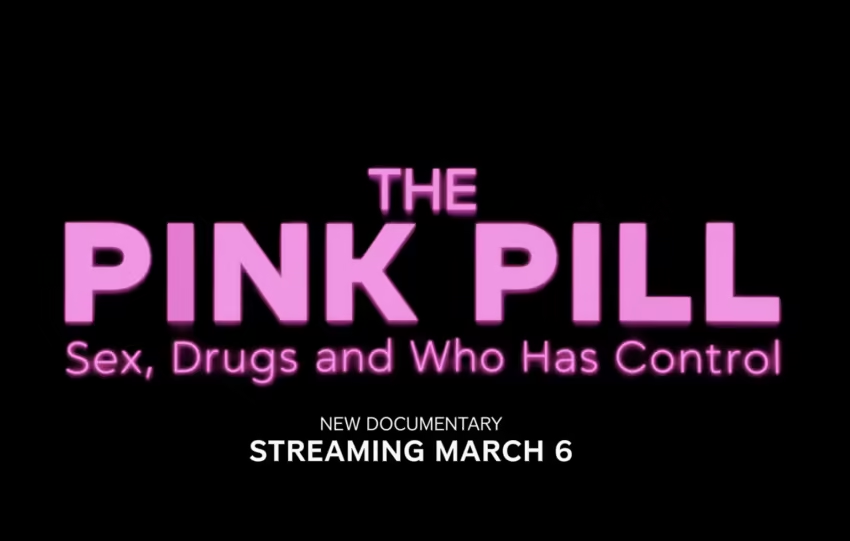
At a moment when women’s health and bodily autonomy are under assault in law and medicine, The Pink Pill documentary exposes how systemic bias has shaped decades of neglect around female desire. This is a news article by The View Magazine. The new Paramount+ documentary The Pink Pill: Sex, Drugs & Who Has Control traces…
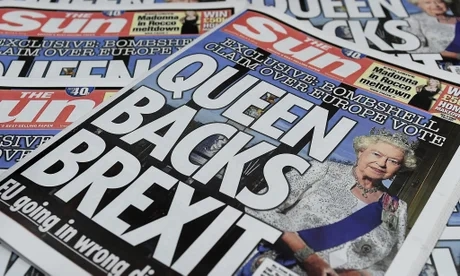
The recent findings from the Press Recognition Panel’s (PRP) 10th Annual Report confirm what many of us have long known: inaccurate, misleading, and intrusive press reporting is causing severe, ongoing harm to individuals and deepening divides across our communities. In an era dominated by digital distribution, artificial intelligence, and algorithmic amplification, irresponsible press coverage rarely…