Order the latest issue here
Skip to content Skip to sidebar Skip to footer

Is “Overdiagnosis” Just a Pretext for Cuts to ADHD & Autism Support?

On 4 December 2025, the government announced that Wes Streeting is launching an independent review into the rising demand for mental health, autism and ADHD services, a move officially presented as a necessary measure to ensure “timely access to accurate diagnosis and effective support.” But for many campaigners, disabled people and families, the real fear…
Read more

0

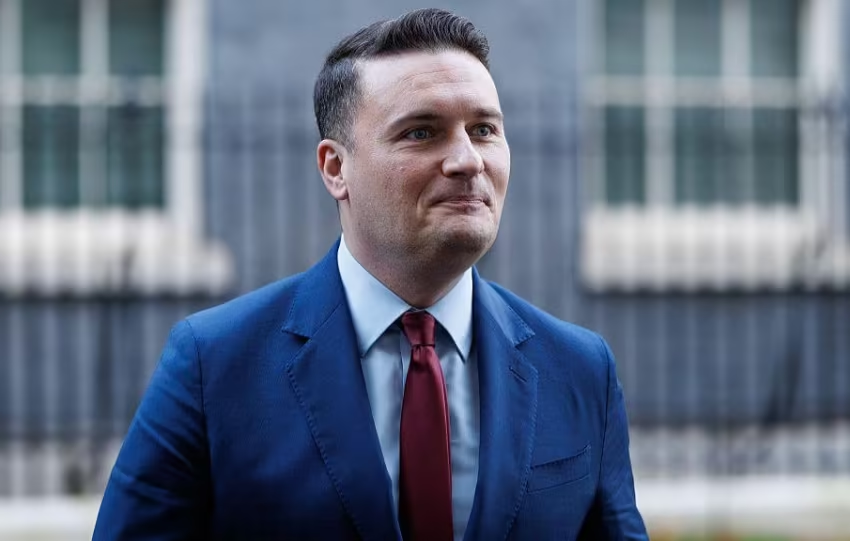
On 4 December 2025, the government announced that Wes Streeting is launching an independent review into the rising demand for mental health, autism and ADHD services, a move officially presented as a necessary measure to ensure “timely access to accurate diagnosis and effective support.”

But for many campaigners, disabled people and families, the real fear is that this review is the thin end of a wedge. Behind platitudes about evidence and better support, there looms a risk that growing claims of “overdiagnosis” will be used to scale back services and slash funding under the guise of fiscal responsibility.

Streeting’s Overdiagnosis Narrative

Streeting has repeatedly suggested that mental health conditions and neurodivergent diagnoses may be over-applied. Speaking in March 2025, he warned there was “overdiagnosis” of mental health conditions and accused the system of “writing off” too many people.

His justification? The soaring number of working-age individuals claiming sickness or disability benefits, including for autism and ADHD, which the government claims has reached 4.4 million.

Why Overdiagnosis Is a Troubling Cover Story

The problem is that many experts and advocacy organisations reject the idea that ADHD and autism are overdiagnosed. For instance, a 2025 NHS-backed report found that ADHD remains severely underdiagnosed and under-treated across the UK. 

The sharp rise in diagnosis and demand for services does not necessarily mean these conditions are over-identified. Rather, it may reflect increased recognition, reduced stigma, more people seeking help, and decades of unmet need finally being registered.

Warming up to a government narrative that frames neurodivergence as “overdiagnosed” risks hurting the very people who have long struggled to get help: children waiting years for an assessment, adults missing out on support, and families forced to pay privately or go without.

Where Cuts Could Hit Hard

Already, some local authorities warn that rising numbers of autism and ADHD diagnoses are dragging down budgets for special educational needs and disability (SEND), threatening mainstream school funding. 

A review that labels many diagnoses as unnecessary could be followed by restrictions: fewer assessments, tighter eligibility thresholds, delays in treatment, or even the removal of certain conditions as qualifying disabilities. For those relying on medication, therapy, or support at school the consequences could be devastating.

What the Government Says and What It Really Means

The official statement from Streeting emphasises support: more mental-health workers, faster access, and a commitment to “transforming” neurodivergent and mental health services. 

Yet, the same announcement raises alarm bells. The framing of rising demand as a problem to be “reviewed,” the invocation of “overdiagnosis,” and the reference to millions on disability benefits all point to one likely target: the welfare bill and public spending.

For many in the neurodivergent community, the review feels less like a genuine attempt at better care, and more like the first step toward legitimising cuts.

Why This Matters

ADHD and autism are lifelong conditions. For individuals to thrive they need consistent support, timely diagnosis, and long-term validation. Casting increasing diagnoses as “overdiagnosis” turns once-hard-fought-for recognition into a scandal, suggesting that people who need help are somehow gaming the system.

If Streeting’s plan goes ahead, this won’t just be about money. It will be about whose suffering counts – and whose doesn’t.

Image source: BBC News