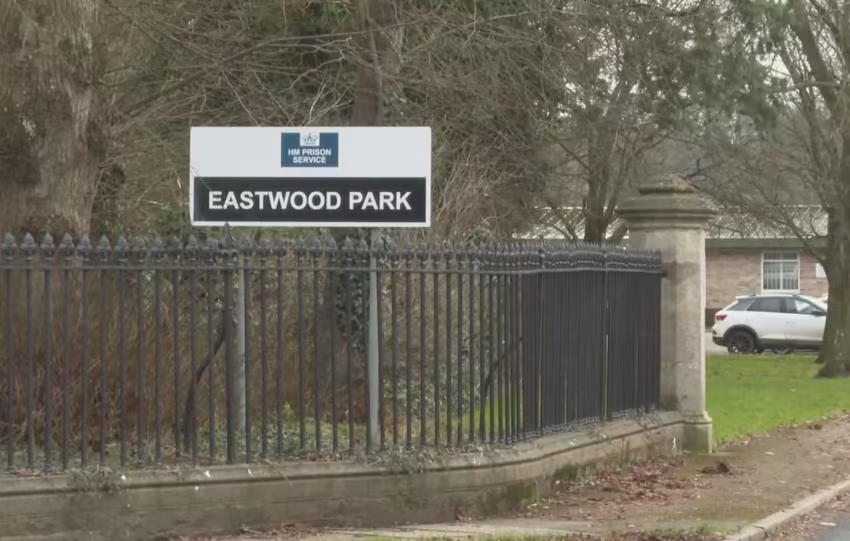
HMP & YOI Eastwood Park, the women’s prison in Gloucestershire, is once again under the spotlight, and for all the wrong reasons. An unannounced inspection by His Majesty’s Inspectorate of Prisons (HMIP) from 17 June to 3 July 2025, published on 22 September 2025, reveals a distressing environment of self-harm, violence, and despair. Although Chief Inspector Charlie Taylor and inspectors acknowledge “determined leadership,” their findings are unequivocal: Eastwood Park is failing the very women it holds.
One of the gravest concerns raised by the HMIP inspection is the dramatic increase in self-harm, violence, and use of force. According to the report, all three have risen since the last inspection and are “among the highest in the country.”
Independent Monitoring Board (IMB) data compounds the worry. In its 2023–24 annual report, the IMB revealed that just seven women accounted for 4,204 self-harm incidents: nearly 40 percent of all repeated incidents across the entire women’s estate. Use of force is also escalating: the IMB reported a doubling in such incidents, totaling 1,039 over the reporting year, often with staff resorting to restraint to manage self-harm episodes.
Worryingly, Inspectors noted that force was sometimes used not as a last resort, but too quickly, even to strip women and place them in anti-ligature (“anti-tear”) clothing. The Independent previously reported that use-of-force incidents in 2023 rose significantly, with at least 91 assaults on staff from prisoners within a nine-month period.
This pattern represents more than a control issue. It reflects a failure to understand and manage crisis, trauma, and mental illness.
Eastwood Park is, in many cases, not just a prison, but a place where women in mental health crisis are trapped. The HMIP report stresses that women with severe mental illness wait far too long for transfer to secure hospitals. The IMB backs this up, noting average waits of 37.5 days, with some held in segregation for much longer: severe neglect when such women desperately need therapeutic care.
Frequent regime curtailments, especially at weekends, mean that many women are locked in their cells for up to 22 hours a day, heightening isolation, distress, and self-harm risk. Inspectors flagged a “lack of full-time activity spaces,” leaving residents without purposeful engagement and without meaningful incentive for positive behaviour.
Basic frustrations matter too: many women reported delays in resolving basic requests, sparking anxiety and resentment.
Some of the statistical findings are particularly stark:
These figures give a picture of a prison stretched to breaking point: a place where vulnerability, crisis, and instability collide.
Key figures and providers in Eastwood Park must now answer for what is going wrong:
Despite these challenges, HMIP does note some positives. According to the 2025 inspection, staff support and capability have improved, and the prison has reduced its reliance on anti-ligature clothing. Additionally, inspectors saw better care for new arrivals and for women who self-harm.
Nevertheless, leadership and oversight still face major tests. The IMB, under Chair Jill Pyatt, is clear: the levels of self-harm are “unacceptably high.” The IMB report highlights how the need for constant supervision of self-harming women diverts staff from the rest of the regime, undermining safety and day-to-day operations.
Charlie Taylor’s 2025 report identifies five priority concerns, among them: the surge in self-harm and use of force, regime curtailment, poor behaviour management, insufficient activity spaces, and inadequate care for older women or those with disabilities. These are not cosmetic issues: they amount to systemic dysfunction.
The constant use of force, especially to manage self-harm, raises serious ethical and safety questions. As The Justice Gap puts it, the prison is “persistently failing in its most basic duty to keep women safe.” When force is used so frequently, it betrays a lack of therapeutic alternatives and a culture of control rather than care.
Perhaps most damningly, the number of women held with serious mental illness who are stuck waiting for hospital beds suggests that Eastwood Park is acting as a de facto mental health institution, without the proper specialist capacity. This is not just a failure of prison management, but a glaring policy gap.
To truly address these failures, immediate and sustained action is needed:
Eastwood Park should not be allowed to remain a symbol of systemic failure. The 2025 inspection is not just a damning report, it is a call to action. If its recommendations are taken seriously, there is real potential for reform. Women who enter this prison in crisis deserve more than containment: they deserve safety, compassion, and the chance for healing.
The leadership of Governor Zoe Short, Prison Group Director Colleen Dixon, and the scrutiny of IMB Chair Jill Pyatt will be decisive. But systemic change will only come if the Ministry of Justice, NHS partners, and the broader prison service commit to radical reform, backed by resources and political will.
Because behind every statistic is a person: vulnerable, distressed, and often forgotten. Eastwood Park must stop being a place where crisis is managed with force, and instead become a place where dignity, care, and hope are possible. That is the promise – and the test – of a prison worth reforming.
Image source: ITV News