
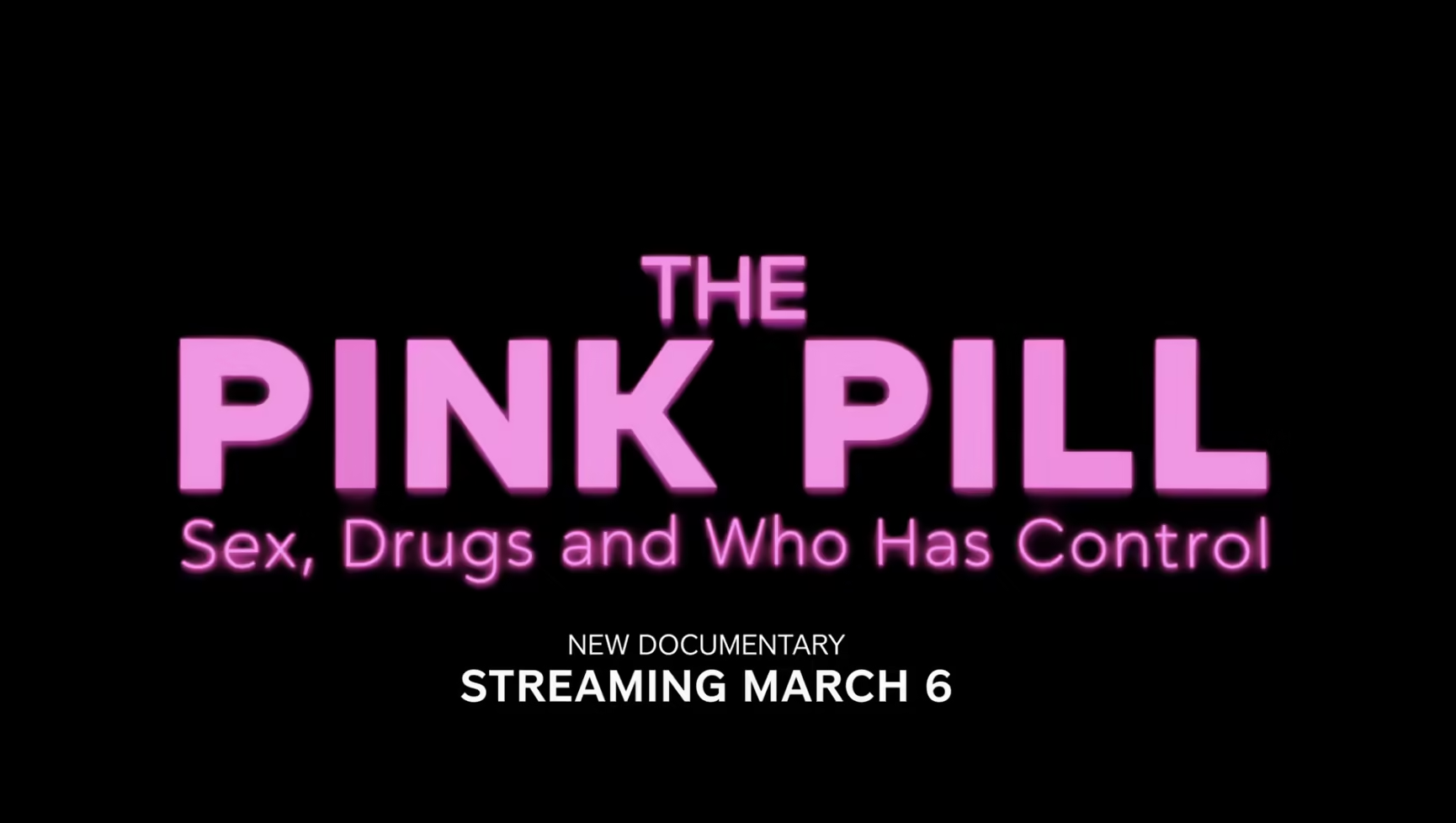
At a moment when women’s health and bodily autonomy are under assault in law and medicine, The Pink Pill documentary exposes how systemic bias has shaped decades of neglect around female desire.
This is a news article by The View Magazine.
The new Paramount+ documentary The Pink Pill: Sex, Drugs & Who Has Control traces the long fight to bring flibanserin (also known as ‘female Viagra’) to market. Flibanserin was originally developed as an anti-depressant by Boehringer Ingelheim, a German company, but instead found it as a promising treatment for low female libido.
The documentary shows how medicine and regulators often dismissed women’s sexual health. While Viagra was quickly embraced for men, women faced skepticism, price gouging, regulatory hurdles, and cultural ridicule. Attested by several sexual health doctors, gynecologists and urologists, most medical school curricula do not include sections on female sexual health, libido, or clitoral anatomy. This is the medical patriarchy.
The documentary focuses on real women’s stories. One participant, Barbara Gattuso, described her loss of libido as ‘somebody pulled the plug’, after decades of happy marriage. During the drug trial, Gattuso said she felt ‘phenomenal’, like a ‘new woman’. Back in August 2015, the US Food and Drug Administration approved flibanserin (or Addyi) for premenopausal women suffering from Hypoactive Sexual Desire Disorder (HSDD), but still, most women are not aware it exists. Even the director of the documentary Aisling Chin-Yee said, ‘I never heard of this drug. (…) The only thing I’ve ever been asked by a doctor is, am I having sex or am I not having sex? And whatever answer I gave always seemed like the wrong answer.’ In the past, the FDA has treated female libido as less important or even frivolous. In fact, they declined to respond to the filmmakers’ interview questions for the documentary.
The Pink Pill premiered on 6 March 2026 and is currently streaming on Paramount+. Watching the film is one way to engage with the issue as it opens a necessary discussion about how healthcare systems can better support and prioritise women’s sexual needs. Advocating for equitable sexual healthcare education, supporting research financially, and challenging regulatory bias are the next steps. It should also prompt wider conversations about women’s sexual health with clinicians, researchers, and policymakers. Addressing these gaps means acknowledging how often women’s sexual health has been overlooked and asking why.