
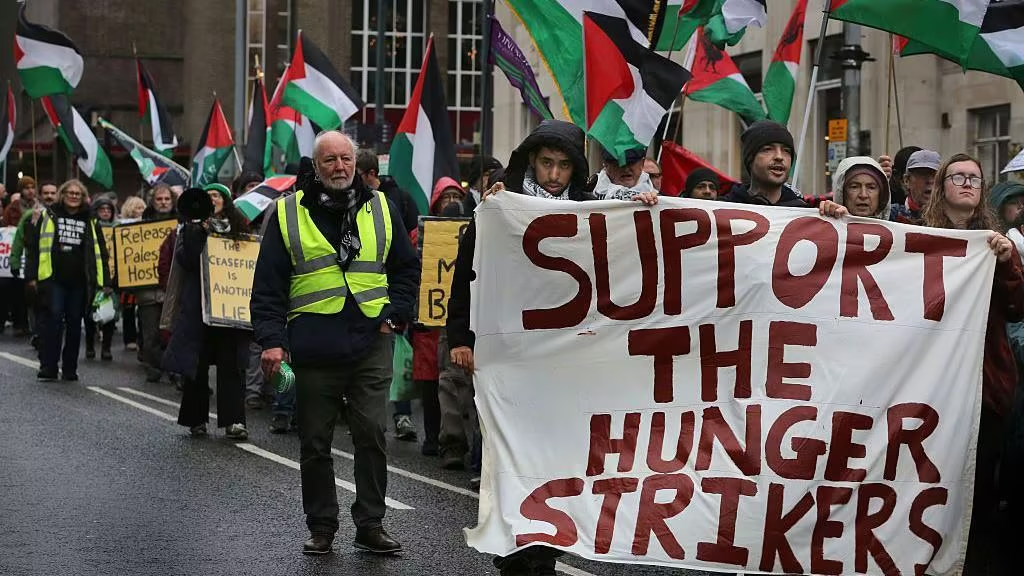
The hunger strikes of Palestine Action activists should trouble anyone who believes that the justice system must be rooted in dignity and equal treatment. Their protest is not a stunt, nor an act of recklessness. It is a last resort taken by women who say they are being treated less humanely than other prisoners, and who feel they have exhausted every other avenue to be heard.
The View has worked with several of these strikers, including Qesser Zurah and Amu Gib, who striked for 50 and 48 days respectively at HMP Bronzefield. What is perhaps most alarming is not only that Zurah and Gib felt compelled to starve themselves, but that it reportedly took MPs protesting outside the prison gates before an ambulance was called. The implication is stark; without public pressure and political embarrassment, their worsening condition may have continued to be ignored. Equal treatment before the law should not depend on who has allies willing to stand in the cold outside a prison wall.
Lawyers for the hunger strikers gave ministers until Tuesday last week to respond to the government’s refusal to hold talks, raising the prospect of a High Court challenge. Yet the Ministry of Justice response has been to frame the issue narrowly as one of discouraging “perverse incentives”. As an MoJ spokesperson put it: “We want these prisoners to accept support and get better, and we will not create perverse incentives that will encourage more people to put themselves at risk through hunger strikes.”
This language is revealing. It sidesteps the central question: why are these women hunger striking in the first place? Hunger strikes do not emerge in a vacuum. They are acts of desperation, undertaken when people believe that normal channels of accountability have been closed off to them.
At the heart of this case lies the controversial move to proscribe Palestine Action as a terrorist organisation. Whatever one thinks of the group’s tactics, the decision represents a profound escalation in the criminalisation of protest. By collapsing non-violent direct action against arms companies into the legal category of terrorism, the state sends a chilling message to campaigners: dissent itself can be treated as an existential threat.
Zurah and Gib’s hunger strike exposes the human cost of that approach. Their bodies have become the terrain on which this political battle is being fought. To dismiss their actions as merely self-harm, or to refuse dialogue on principle, is to deny their agency and their political voice.
Sympathy for the hunger strikers does not require unanimity about Palestine Action. It requires a basic commitment to humane treatment, equal standards in custody, and the recognition that protest is not terrorism. If the state cannot respond to this crisis with care and openness, it risks proving the very point these women are starving themselves to make.
Image source: BBC
Opinion article by The View.