Prodigal Arts is a charity that helps people in prison and former offenders to start a new life by giving them an opportunity to explore their artistic talents and ‘unlocking’ their creativity. “Creativity can unlock potential and foster a sense of purpose in people society too often forgets.” Based in Bristol, Prodigal Arts is a…

The View Magazine


There’s a striking line in the latest Angiolini Inquiry report: the government should consider a wider Good Samaritan (or “duty to act”) law as part of a package to prevent sexually motivated attacks in public. The recommendation, which includes a timetable for ministers to look at the case by July 2026, has reignited a heated…

Science increasingly shows that hope is one of the most powerful emotions we possess. It shapes wellbeing, strengthens resilience, and buffers the long-term effects of trauma. But new research raises a crucial question: what if a traumatised brain can no longer access hope at all? Groundbreaking studies at Yale University reveal that PTSD alters the…
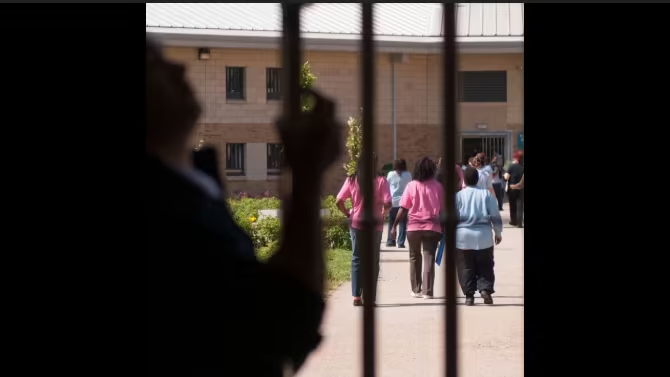
The tragic death of Diana Ocean Grant in November 2021 is a stark reminder of how vulnerable people with severe mental health conditions continue to be failed by the very systems meant to protect them. Diana, diagnosed with paranoid schizophrenia in 2002, suffered a relapse in late 2021. Despite clear warning signs reported by her…

The launch of the Women’s Justice Board on 21 January 2025 marks a significant moment in rethinking how the UK treats women in the criminal justice system. Campaigners have stressed that women’s offending is often rooted in trauma, domestic abuse, poverty and addiction. Prisons rarely address these issues and often deepen the harm. Chaired by…
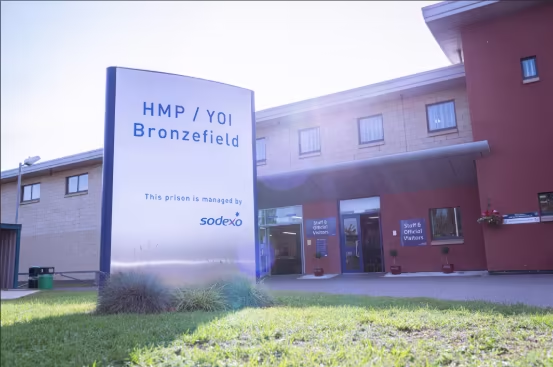
A new IMB (Independent Monitoring Board) report on HMP/YOI Bronzefield, published on 10 December 2025, reveals a devastating reality: women in acute mental distress are still being sent to prison because secure psychiatric beds simply don’t exist. Despite warnings in the 2023 IMB thematic report, Bronzefield’s 2024-25 annual review shows that almost nothing has changed,…
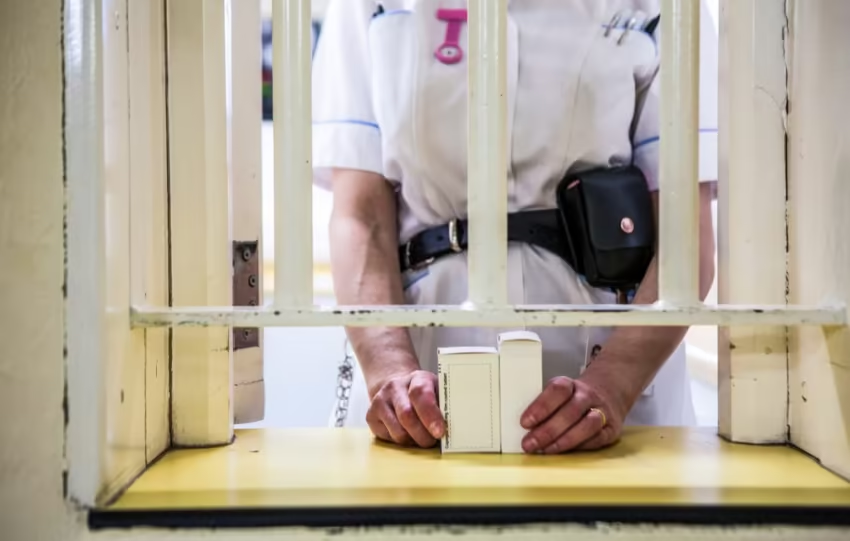
The NHS says prison healthcare should mirror the care available in the community. But behind locked doors, that promise crumbles. In Women’s Health Review – Is the NHS Just Banging Its Own Drum Again?, writer Mason Morgan exposes a system stretched past breaking point; where cost-cutting, understaffing, and bureaucratic denial leave women fighting not just…
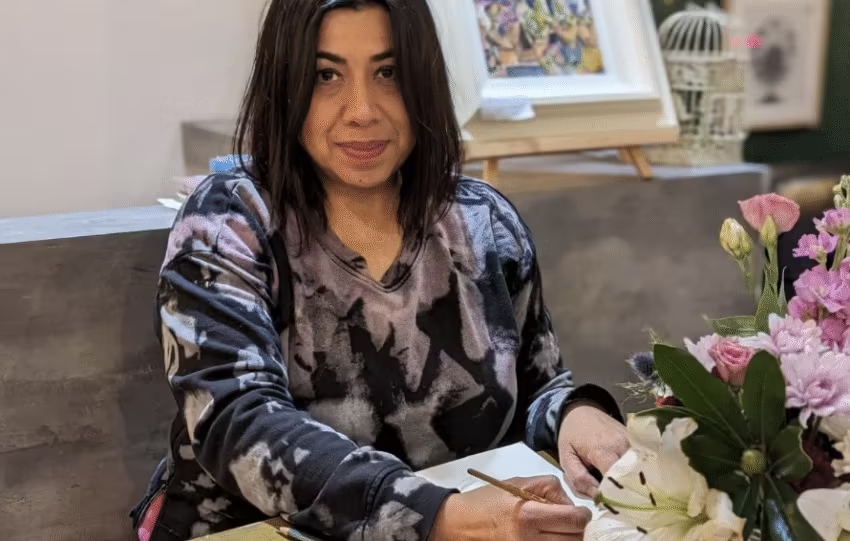
In a new press release, the Feminist Justice Coalition explains how Farah Damji, a 59‑year‑old woman held in the women’s estate, launched legal action against the Ministry of Justice. This comes after Farah was made to miss months of oncology appointments and was refused key scans and therapies. Farah has stage‑three HER2‑positive breast cancer and,…
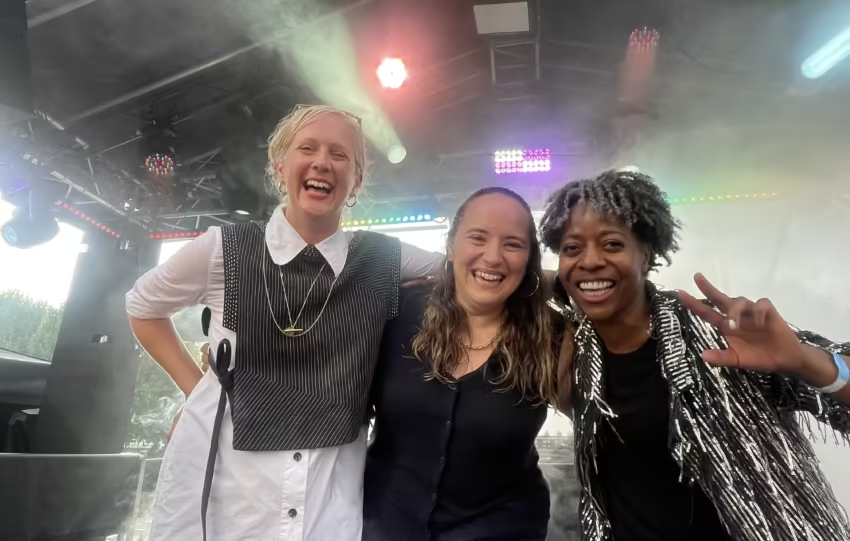
Grief in Britain is often a private affair, spoken about quietly, if at all. Yet in a culture that keeps loss behind closed doors, a new movement is inviting people to bring their sorrow into the light. Grief Raves: The Groove is in the Heart explores how artist Annie Frost Nicholson and Carly Attridge, founder…
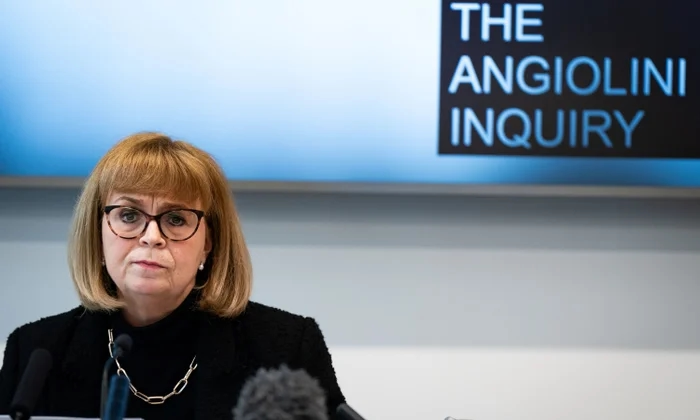
The Angiolini Inquiry’s new Part 2 First Report, published on 2 December, is a stark reminder of a truth women already know in their bones: public spaces still don’t belong to us. Four years after the abduction, rape and murder of Sarah Everard by a serving Metropolitan Police officer, this report asks a deceptively simple…