
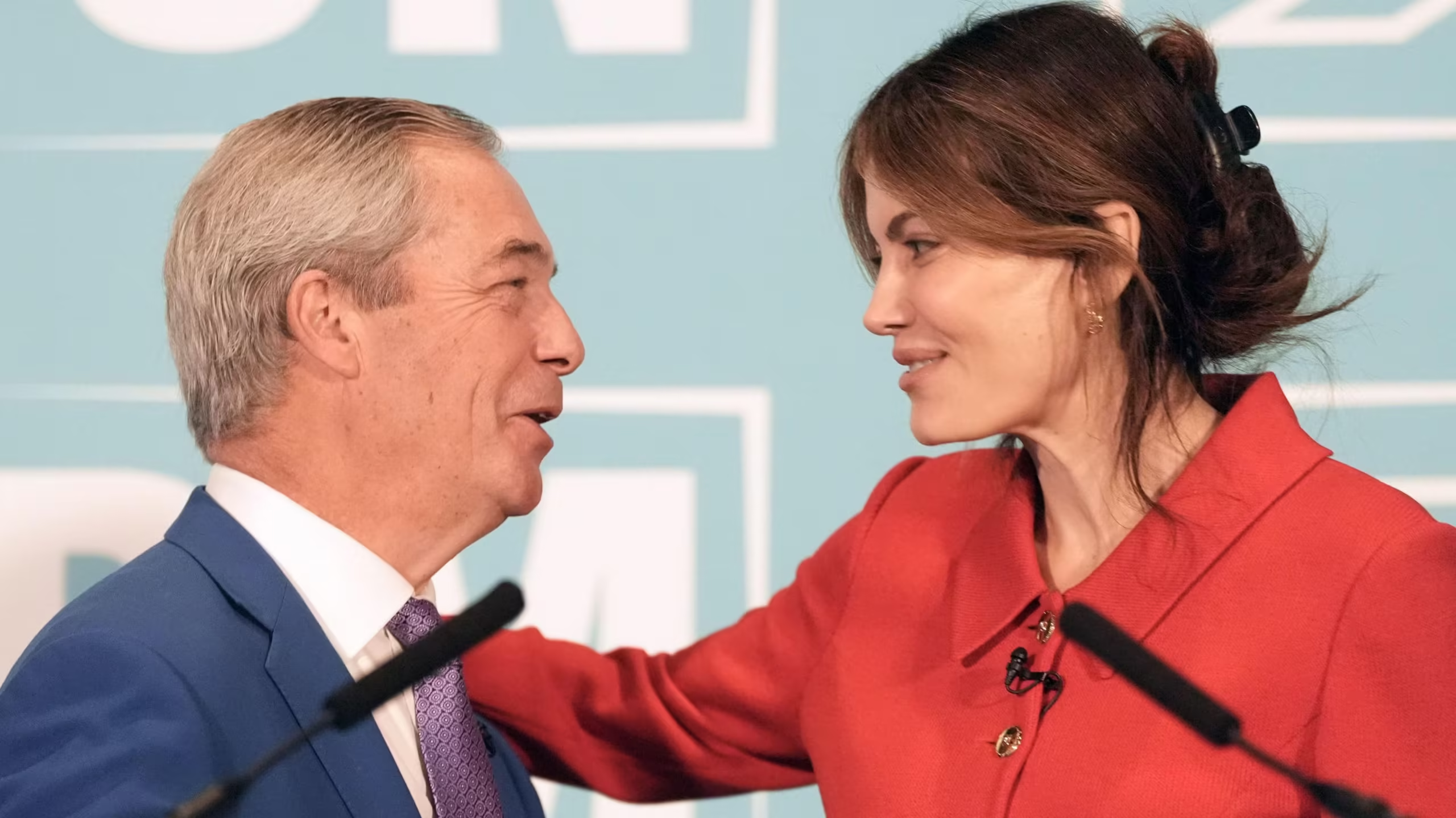
Reform UK’s announcement that Laila Cunningham will be its candidate for London mayor in 2028 has put the capital’s political discourse in an unexpectedly sharp focus. A former senior Crown Prosecution Service (CPS) lawyer turned local councillor and mother of seven, Cunningham’s profile combines personal success with political controversy, a mix that encapsulates both her appeal to some voters and alarm for others.
Born in London to Egyptian immigrant parents who arrived in the UK in the 1960s, Cunningham’s early life reflects a classic story of opportunity: her family settled, worked hard, and embraced British life. She pursued law, rising through the CPS ranks and specialising in prosecution before entering politics.
Her transition from civil servant to political firebrand was not seamless. In 2025 she resigned from the CPS after making a series of publicly political comments about crime and law enforcement following her defection from the Conservative Party to Reform UK. As a prosecutor, she was bound by strict impartiality rules, and her remarks – sharply critical of London’s policing and immigration – made her position untenable. Critics argue this episode raises questions about her judgment; supporters frame it as principled dissent.
Cunningham’s policy positions, particularly on immigration, have been a source of significant controversy. On one hand, she insists that London is “not reliant on migrant labour” and argues that the UK has long imported “foreign cheap labour” which she claims has suppressed wages and strained public services. On the other, she has faced criticism for comments that some interpret as feeding into xenophobic narratives, even as she points out that newcomers “contributing to this country” are welcome. A fiery exchange on BBC Newsnight in 2025 saw her defend linking crimes by specific nationalities to broader immigration policies, a stance that alarmed many commentators and illustrates how her crime-linked rhetoric can veer into highly contentious territory.
Islam and identity further complicate her public image. As a practising Muslim, Cunningham defies simple stereotypes, yet she has also suggested elements of London’s multicultural landscape feel “not in England at all,” drawing criticism for seeming to question the place of Muslim cultural expressions in public life.
Her campaign is also noteworthy, and somewhat paradoxical, because she is a woman and a daughter of immigrants running for a major civic role for a party best known for its hard-line stances on immigration. Cunningham herself has acknowledged facing racist and misogynistic abuse online, saying that such vitriol doesn’t sway her, but has also positioned herself as speaking for women frustrated with crime and economic pressures.
Reform’s leader Nigel Farage has seized on her identity as an asset, touting her as “articulate, passionate, a mother” who will professionalise the party’s London campaign. Yet for many observers, her blend of personal background and political agenda highlights a deeper tension in British politics; when diversity is deployed to champion policies that many see as at odds with the interests of a multicultural, global city like London.
Whatever one’s view of her politics, Laila Cunningham’s candidacy is a fascinating moment, not just in the 2028 mayoral race, but in the broader debate over identity, immigration and the future of London itself.
Image source: BBC