In the United States, one third of corrections institutions restrain pregnant and labouring women. This goes against the best practice recommendations of medical, legal, and human rights organisations. Restraining women during pregnancy and childbirth pose health and developmental risks to both mother and baby. We call for federal legislation to ban the use of restraints…
How the Bail System disadvantages Foreign National Women
Foreign national women are more likely to be remanded in custody while awaiting trial or sentencing than British women, often for less serious offences. They make up a significant and increasing proportion of prison admissions on remand in England and Wales, raising concerns that compliance with national…
It took four years and tireless advocacy, but Middletown mom Nikki Tierney’s crusade to change New Jersey law came to fruition Tuesday.
Gov. Phil Murphy signed a bill that expands the offenses eligible for expungement for drug court graduates. The measure, which passed the state legislature with strong bipartisan support, creates a path to expungement for recovering…
BY SUE WHEATCROFT
The lack of mental health training for probation staff can have dire consequences for people being managed on license in the community. Sue Wheatcroft tells The View about her experience in an article written for The Probation Journal, which was later censored and removed. How are organisations meant to learn when they…
The View condemns the unacceptable rise of death in custody following the publication of the Ministry of Justice Safety in Custody Statistics: Quarterly Update to September 2021 The Ministry of Justice Safety in Custody Statistics September 2021 report found that there was an increase in deaths in prisons from the 12 months to December…
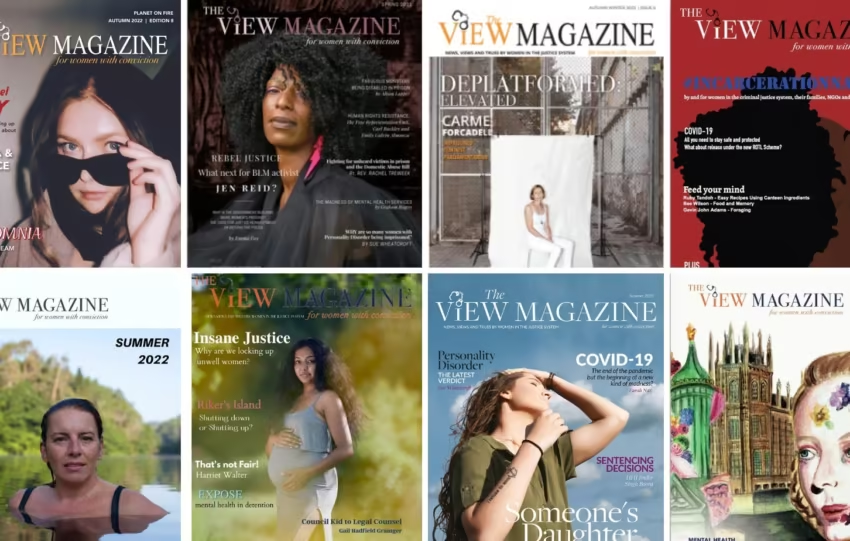
Our Autumn Winter 2022 edition is packed with news views and trues by women in the justice system. Someone’s Daughter – More portraits by leading photographers of women in the justice system from our campaign, which launched at Photo London in September 2021. The Right to be Forgotten by Joy Martin. How does the Google Effect play on…
Last summer, the British government unveiled their new prison expansion project, Alliance 4 New Prisons (A4NP). It is just one £1bn-sized part of a pledge to spend £4bn of public funding on creating 18,000 new prison places. Under the plan, 4 new male prisons have been proposed: one confirmed next to HMP Full Sutton in…
Monday marked the start of the 2 week long COP26 meeting in Glasgow that will see world leaders including the UK and USA outline future plans to combat climate change. This time, they say, it will be different as they make new promises that they will almost undoubtedly fail to deliver. They are striving to…
A former female prisoner from Reading is calling for alternatives to jail for women who commit crime.
41-year-old Francesca Fattore, who spent three years and eight months in prison for drug offences, says there are better ways to help women reform and rebuild their lives.
According to figures from the Ministry of Justice, there are…
In jail, Francesca Fattore was finally able to leave a life of addiction and crime behind her – but the suffering she saw there spurred her to campaign for alternatives to prison for female offenders. Here, she speaks to Jenn Selby
View full article
In the United States, one third of corrections institutions restrain pregnant and labouring women. This goes against the best practice recommendations of medical, legal, and human rights organisations. Restraining women during pregnancy and childbirth pose health and developmental risks to both mother and baby. We call for federal legislation to ban the use of restraints on pregnant women unless a legitimate safety or security risk exists.
Women and girls are the fastest growing incarcerated population in the USA. There are approximately 231,000 women in local jails and state prisons. Between 4 and 10% of the women admitted are estimated to be pregnant. Black women are disproportionately affected as they are 1.7X more likely to be incarcerated and 3-4X more likely to die due to pregnancy complications.
Restraints are defined as “Any device that restricts the ability of an incarcerated person to move their body or limbs, including handcuffs, ankle cuffs, belly chains, and convex shields.” Policies were designed in the 1970s with violent male offenders in mind, these do not account for the needs of the rising female population, particularly pregnant women. 58,000 healthcare professionals within the American College of Obstetrics and Gynaecologists agree that restraints increase health risks as it is more difficult to diagnose and treat potentially life-threatening conditions. Restraints can increase the risk of falls, delayed C-sections, shoulder dystocia, haemorrhage and other serious conditions. It is a humiliating and traumatic experience for the mothers and prevents the ability of the mother and child to bond after birth.
The ACLU argue that restraining women during labour is unconstitutional as a violation of the 8th amendment – the right to be free from cruel and unusual punishment. Courts have agreed that any institution that restrains women during childbirth are liable if they cause harm to the mother or child. Amnesty International supports this ruling as the UN Standard Minimum Rules for the Treatment of Prisoners prohibits restraints on pregnant prisoners and calls for all states to comply with international human rights standards.
“The View is brilliant, thought-provoking and exiting” Clare Swift, Director, London College of Fashion
We noticed you're visiting from United States (US). We've updated our prices to United States (US) dollar for your shopping convenience. Use Pound sterling instead.Dismiss