Order the latest issue here
Skip to content Skip to sidebar Skip to footer

Good Behaviour, Bad Policy: Why Sentence Reductions Handed to Prison Staff Risk Injustice and Corruption

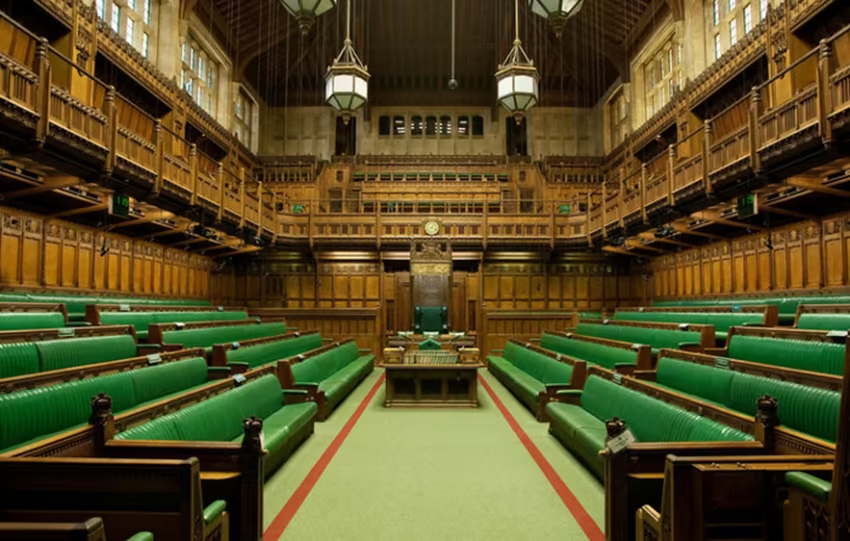
The government’s Sentencing Bill, currently progressing through Parliament, proposes reducing prison sentences for “good behaviour.” On the surface, this sounds like a progressive reform, rewarding rehabilitation and incentivising positive conduct. In reality, without rigorous safeguards, training, and oversight, it risks embedding corruption, inequality, and arbitrariness deep into the prison system. Under the proposals, offender managers…

Read more

Trauma and Hope

Science increasingly shows that hope is one of the most powerful emotions we possess. It shapes wellbeing, strengthens resilience, and buffers the long-term effects of trauma. But new research raises a crucial question: what if a traumatised brain can no longer access hope at all? Groundbreaking studies at Yale University reveal that PTSD alters the…

Read more

Lord Timpson and the Push to Rethink Women’s Imprisonment: The Women’s Justice Board

The launch of the Women’s Justice Board on 21 January 2025 marks a significant moment in rethinking how the UK treats women in the criminal justice system. Campaigners have stressed that women’s offending is often rooted in trauma, domestic abuse, poverty and addiction. Prisons rarely address these issues and often deepen the harm. Chaired by…

Read more

Mental Health Crisis Behind Bars: Why HMP Bronzefield Is Failing Vulnerable Women

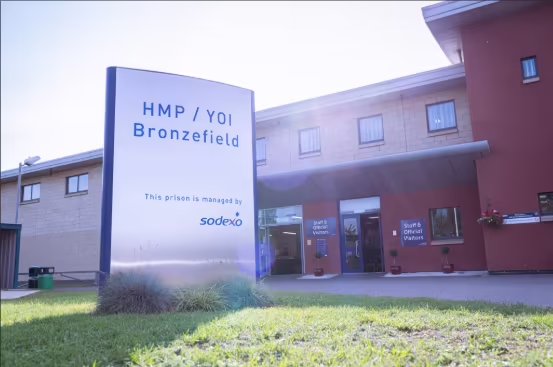
A new IMB (Independent Monitoring Board) report on HMP/YOI Bronzefield, published on 10 December 2025, reveals a devastating reality: women in acute mental distress are still being sent to prison because secure psychiatric beds simply don’t exist. Despite warnings in the 2023 IMB thematic report, Bronzefield’s 2024-25 annual review shows that almost nothing has changed,…

Read more

A woman diagnosed with aggressive breast cancer is taking the UK government to court, making the case that she was denied life-saving treatment whilst in prison.

In a new press release, the Feminist Justice Coalition explains how Farah Damji, a 59‑year‑old woman held in the women’s estate, launched legal action against the Ministry of Justice. This comes after Farah was made to miss months of oncology appointments and was refused key scans and therapies.​ Farah has stage‑three HER2‑positive breast cancer and,…

Read more

The System Is Failing Fran: A Woman With Cancer Lost in the Gaps of Probation, Prisons, and Healthcare

At 39, Fran Geary should be focusing on surviving stage two breast cancer. Instead, she is fighting for her life inside a system that treats her illness as an inconvenience rather than an emergency. In this shocking investigation, The View Magazine exposes the dangerous failings that have defined Fran’s journey; from delayed diagnosis to brutal…

Read more

0

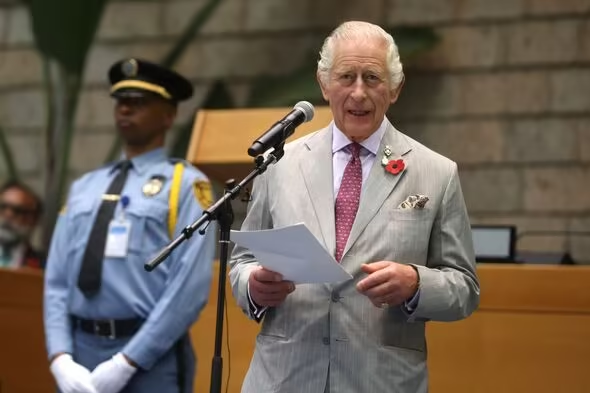
When King Charles delivered his Stand Up to Cancer talk, he spoke passionately about the importance of cancer screening and his own journey of recovery. His words were broadcast across the nation, celebrated as a message of hope. Yet for women in prison across England, the speech was a devastating reminder of their invisibility.

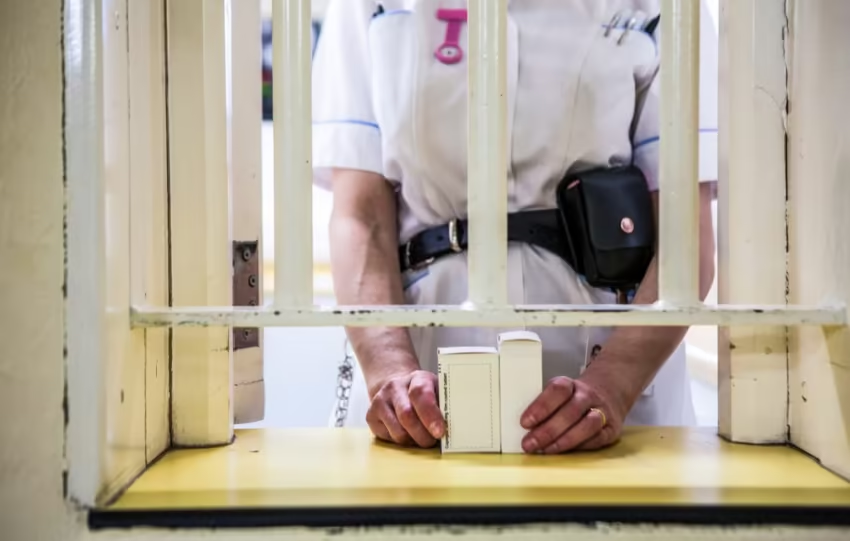
Behind prison walls, women living with cancer are denied access to screening, hospital appointments, and even basic treatment. Their letters and appeals for mercy have gone unanswered. While the King expressed gratitude for reduced treatment next year, incarcerated women cannot even access the most fundamental care. This stark contrast is not just disappointing; it is shameful and unacceptable in 21st-century England.

Cancer does not discriminate, but the justice system does. Women in prison are punished twice: once by the courts, and again by a healthcare system that abandons them. Their suffering is compounded by silence from those in power. When the monarch speaks about cancer without acknowledging their plight, it reinforces a hierarchy of whose lives are deemed worthy of compassion.

This is not a matter of politics; it is a matter of humanity. If cancer awareness is to mean anything, it must extend to those society has locked away. Ignoring these women perpetuates inequality and undermines the very principles of justice and dignity.

The King’s recovery is celebrated, but the women in prison remain unseen. Their struggle is real, urgent, and demands attention. The time for change is now.