
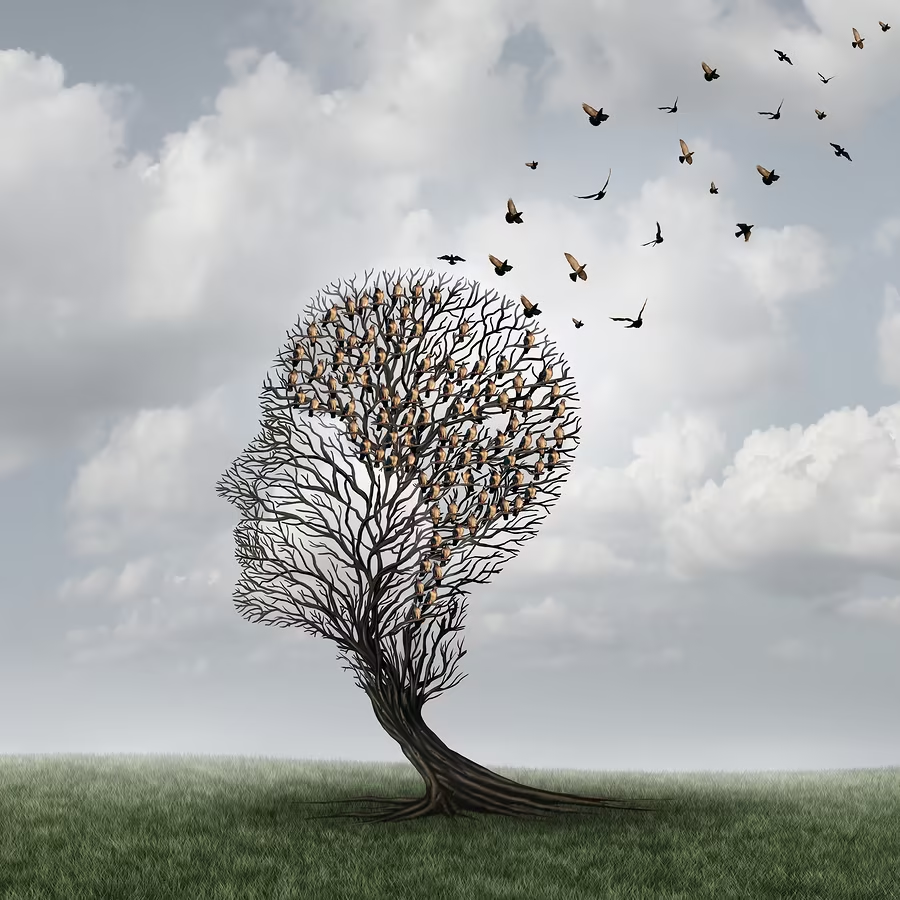
Science increasingly shows that hope is one of the most powerful emotions we possess. It shapes wellbeing, strengthens resilience, and buffers the long-term effects of trauma. But new research raises a crucial question: what if a traumatised brain can no longer access hope at all?
Groundbreaking studies at Yale University reveal that PTSD alters the brain at a cellular level. The prefrontal cortex—the region responsible for emotional regulation and generating hope—is effectively “turned down”, leaving the brain in a hyperalert state. For many women in prison, already living with trauma, this means the ability to feel hopeful may be biologically impaired, not simply emotionally difficult.
At the same time, a 2025 University of Missouri study found that hope is unique among positive emotions: it can still arise in adversity, offering meaning and a sense of future even when gratitude or joy feel unreachable. But this relies on neural pathways that trauma may disrupt.
Women in prison, many of whom enter custody already traumatised, are often told to “stay hopeful”. Yet without trauma-informed care, proper mental health support, and environments that reduce stress rather than amplify it, hope cannot flourish.
If we want rehabilitation to be real, we must design systems that make hope biologically possible again.
Read Helen Chrabsolom’s full article on The View 15 here The View Magazine Issue 15 Autumn 2025 Digital Edition – The View – for women with conviction
Image source: Depth Insights
Opinion article by The View.